
Taking Psilocybin at a Macro-dosage, usually defined as between 2 and 5 grams of dried psilocybin mushrooms, has been shown by numerous scientifically meticulous studies to reliably elicit spiritual, mystical, or transcendent experiences that have lasting positive effect on the subject, with as little as one dose.
Based on the results of these studies, the U.S. Federal Drug Administration has also recently given psilocybin a "Breakthrough Therapy" designation, which is granted only when preliminary evidence suggests the drug may be an enormous improvement over already available therapy.
This designation will fast-track many potential psilocybin treatments through clinical trials, many of which are already underway. Health Canada has also awarded multiple licenses for the research and development of a psilocybin treatment and has granted several hundred personal exemptions for the personal use of psilocybin mushrooms.
Macrodose Effects
The reason why Psilocybin experiences are referred to as "trips" is because psilocybin at high dosage often produces intense, immersive experiences that offer profound insights into your own psyche, and cause drastic shifts in thought pattern/process and perception. It has been firmly established (through almost 2 decades of research) that Psilocybin is one of the safest naturally occurring psychoactive substances, and can be utilized to treat a host of psychological conditions, but what exactly does a Psilocybin experience feel like?
The effects of psilocybin can vary subjectively based on numerous factors, like body weight, mind-state, and even your expectation of what the experience will entail. Psilocybin's effects can include euphoria, confusion, hysteria (laughing fits) synesthesia, altered thought process, altered sense of time, sensory enhancement, visual hallucination, spiritual or mystical feelings of unity and connectedness, and even out-of-body experiences.
We recommend starting with between 2-2.5 grams of dried mushroom for a full experience.

The Science Behind Psilocybin
For thousands of years, consuming psilocybin mushrooms has been recognized for inducing expanded states of awareness, profound self-reflection, and unique philosophical insights. While modern science can measure the body's metabolic response to these compounds, research is still ongoing into how and why these fungi synthesized such psychotropic effects.
Once ingested, psilocybin is converted by the liver into psilocin. Contrary to common belief, psilocin—not psilocybin itself—is the active agent driving mind-altering effects. Its molecular structure closely mirrors serotonin (a key neurotransmitter involved in mood, cognition, and perception), enabling it to bind directly to serotonin receptors (specifically the 5-HT2A group).
Beyond its interactions with the serotonergic system, psilocybin influences several other neural pathways and processes:
- Promoting neuroplasticity through increased production of Glutamate* and Brain-Derived Neurotrophic Factor (BDNF).
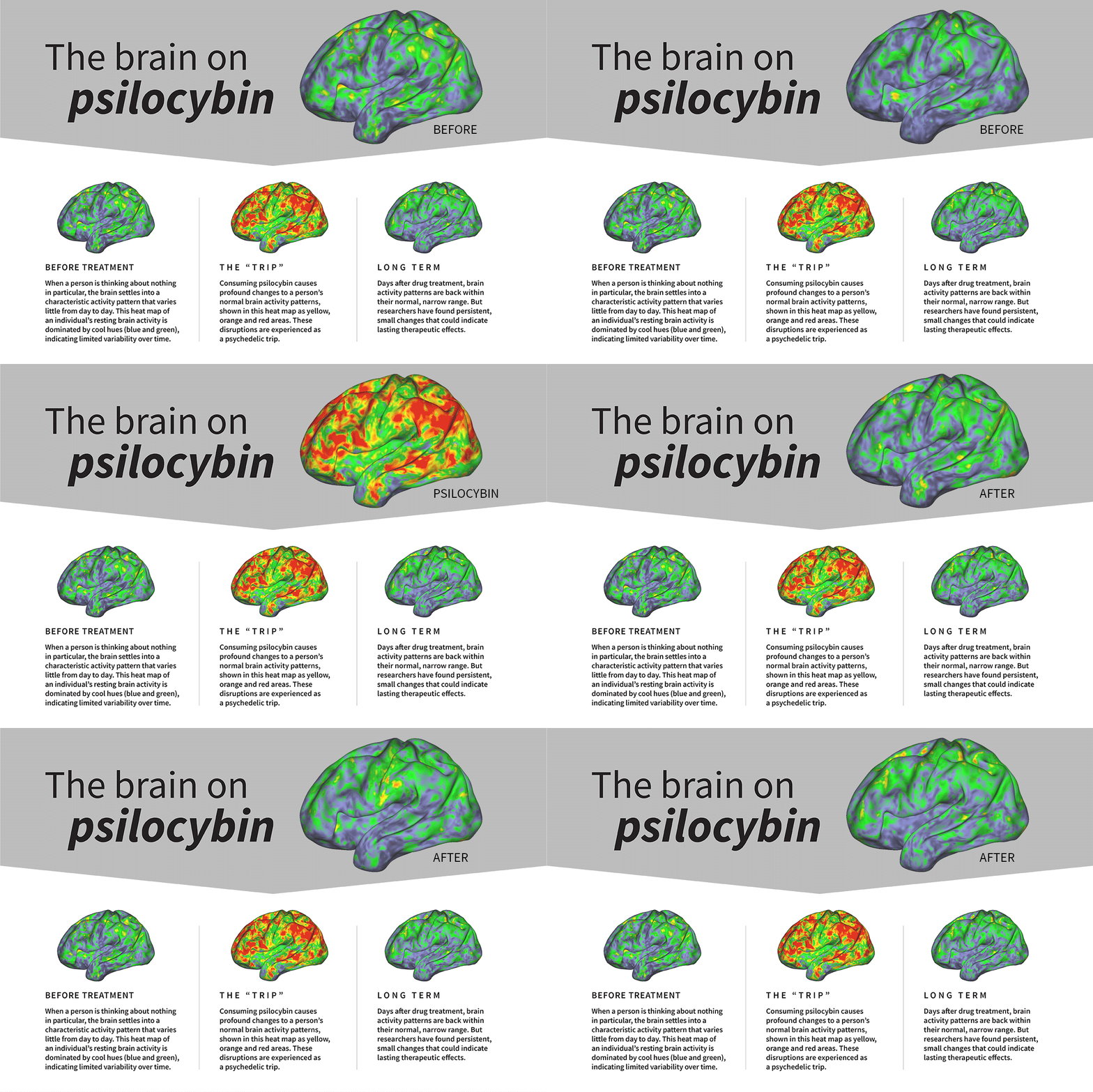
- Reducing activity within the Default Mode Network (DMN), a brain network typically overactive in individuals experiencing depression.
- Encouraging cross-communication between brain regions that normally do not interact during typical waking consciousness.
*Glutamate is a critical neurotransmitter involved in memory, learning, and synaptic plasticity. BDNF is a protein that supports neuron growth, long-term memory formation, and sensory processing.
Although psilocybin is regarded as having a high safety profile physiologically, psychological challenges can arise. Preparation, setting, and mindset play significant roles in steering the quality of the experience.
Research from leading institutions, including Johns Hopkins University, indicates that even when participants report challenging sessions, a large majority view the experience as personally meaningful and conducive to long-term well-being.
Compared to many conventional treatments, psilocybin demonstrates a favorable safety profile in clinical settings. Studies continue to evaluate its effectiveness in relieving end-of-life anxiety, managing treatment-resistant depression, addressing cluster headaches, and supporting recovery from trauma.
Additional Resources
Explore these curated communities, articles, and educational platforms to learn more about psychedelic research and mushroom biology:
Communities & Portals
- Cultivation & Mycology Forums - Discussion hubs for mushroom growers
- Shroomery & Related Subreddits - Community experiences and strain guides
- TripSit & Harm Reduction - Real-time support and safety resources
- Psychedelic Research Databases - Compiled academic papers and clinical trial news
- Integration Resources - Guides on processing and applying insights
Articles & Media
- Healthline: Medical Overview of Psilocybin
- Vox / Quartz: Policy & Legalization Trends
- Michael Pollan & Joe Rogan Discussions
- The War on Consciousness (TED Talk)
- Mycelium & Fungal Biology Podcasts